01 / The project
From a distance the Cathedral of Saints Peter and Paul is part of the city’s silhouette. Closer up, its tower, window recesses and facade relief tell a more detailed story. The lighting needed to make both views legible.
A landmark seen anew in light.
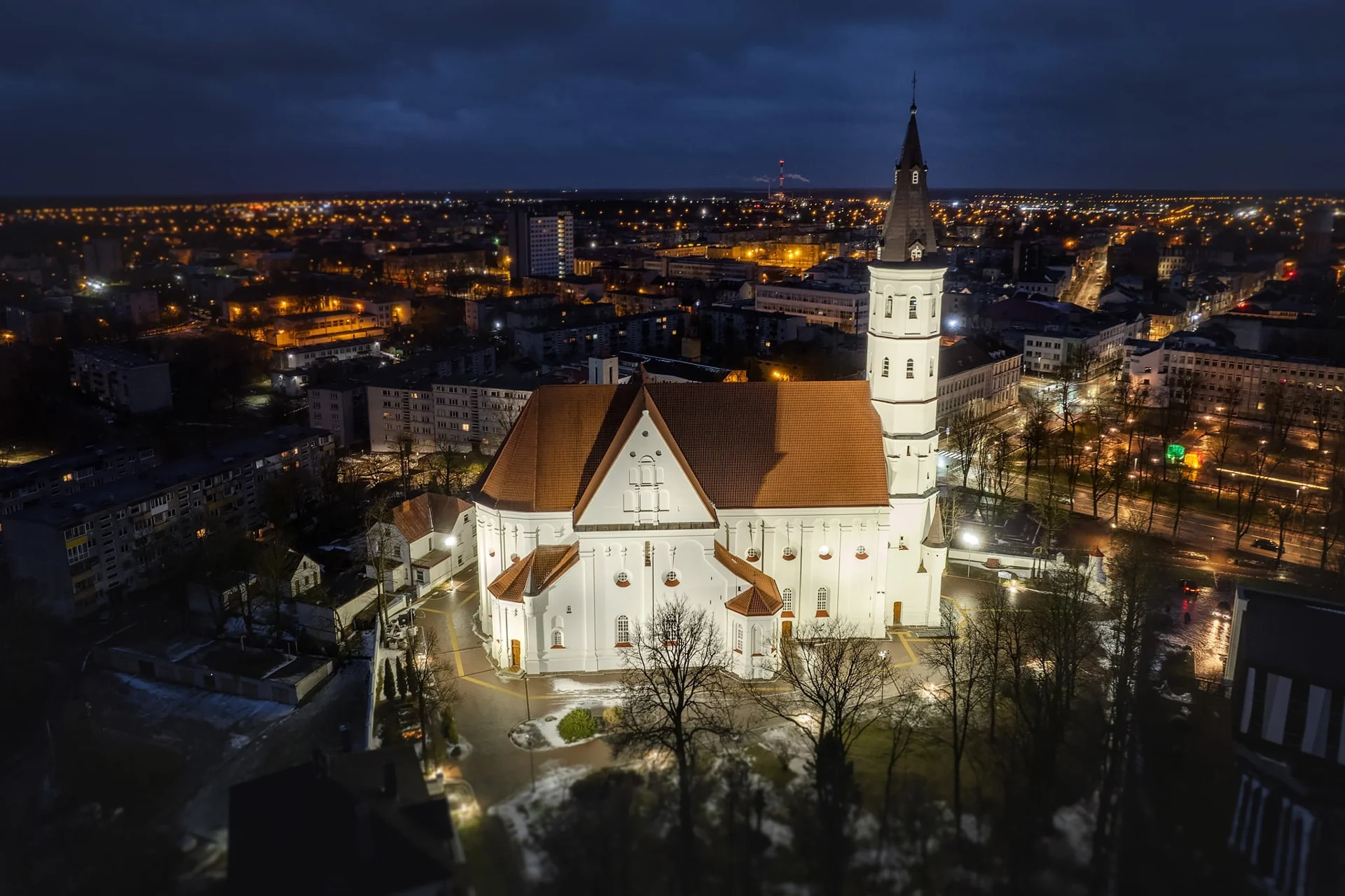
From a distance the Cathedral of Saints Peter and Paul is part of the city’s silhouette. Closer up, its tower, window recesses and facade relief tell a more detailed story. The lighting needed to make both views legible.
The project had to be developed without building drawings. New luminaires could only use existing mounting positions, while the previous lighting system had an installed power of 6 kW. The team needed to direct light from those fixed points onto surfaces at different heights and depths.
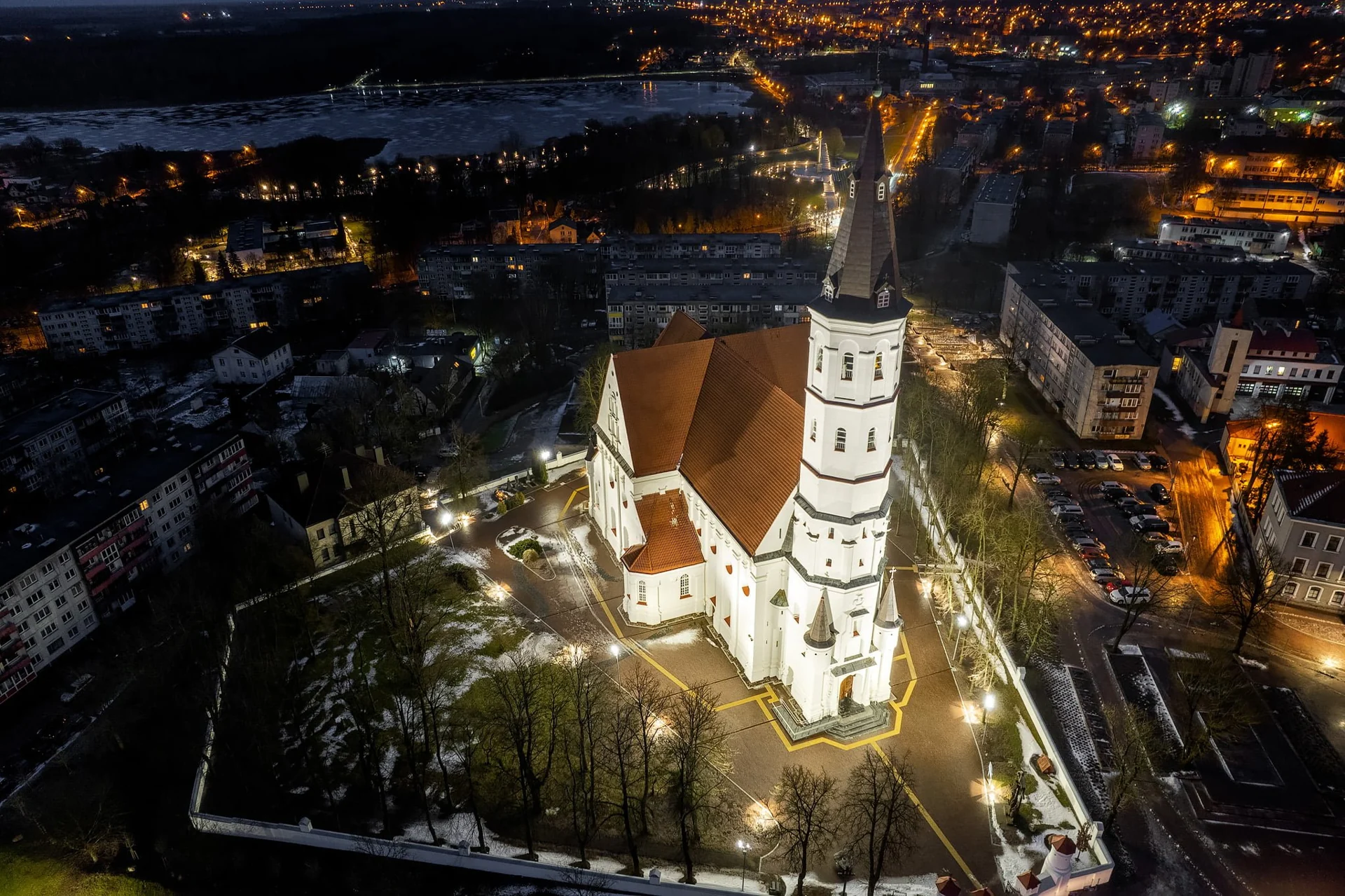
We treated the facades, tower and details as one composition, selecting luminaires, optics, power and aiming for each part of the building. Broad facade lighting and architectural accents work together: the outline remains recognisable from afar, while light and shadow reveal the recesses and relief up close.
The renewed system has an installed power of approximately 1.5 kW, about 75% lower than before. With the same operating hours and control settings, electricity demand would fall correspondingly; actual consumption depends on how the system is used.
The result connects architectural expression with an efficient use of the existing infrastructure. The tower remains a clear landmark after dark, while the facade’s details become visible as visitors approach.